
January still wants names
A year just closed
The new year is spending
January forms need the names of who was paid.
Bookkeeper vs CPA Alternative
Four taps. The title is not the job.
Two titles. One month you can point at.
Steven Palmieri is a Tax CFO, not a CPA firm. A bookkeeper records the month. A CPA firm signs an attest report when one is required. A Tax CFO decides what happens next from a month you can point at. The free call says which of those you need.
You will be talking with the CPA alternative, a Tax CFO, not a CPA firm. If the paper in front of you really demands a signed audit, we will say so and stop there.
The monthly books stay here, payday is set up on a service you operate, the return follows those months, and the year is planned with Steven Palmieri, a Tax CFO and the Entrepreneur's CFO.
A Tax CFO decides the year.
A bookkeeper writes what happened.
A CPA may sign a report and may prepare a return. The paycheck, the purchase, the estimated payment, and the year's plan are a further job. That job is the Tax CFO. The books stay in this practice. Before the first payday we connect the service that already pays your people, so each run lands in the month instead of in a side file. Once the months agree, the return is prepared from them, and the year's plan is chosen in that same conversation. A report that needs a licensed signature is named on the first call, and then it goes to a firm that can sign it.

Tell us whether the books, the return, or the year's plan is the open piece.

You will be talking to the Steven Palmieri practice.
The books and the signature are different work, and here is which is which.
Click to read both jobs ›Tap to read both jobs ›
Write what you thought each title would do. Most lists come apart into three piles.
Click to sort the jobs ›Tap to sort the jobs ›
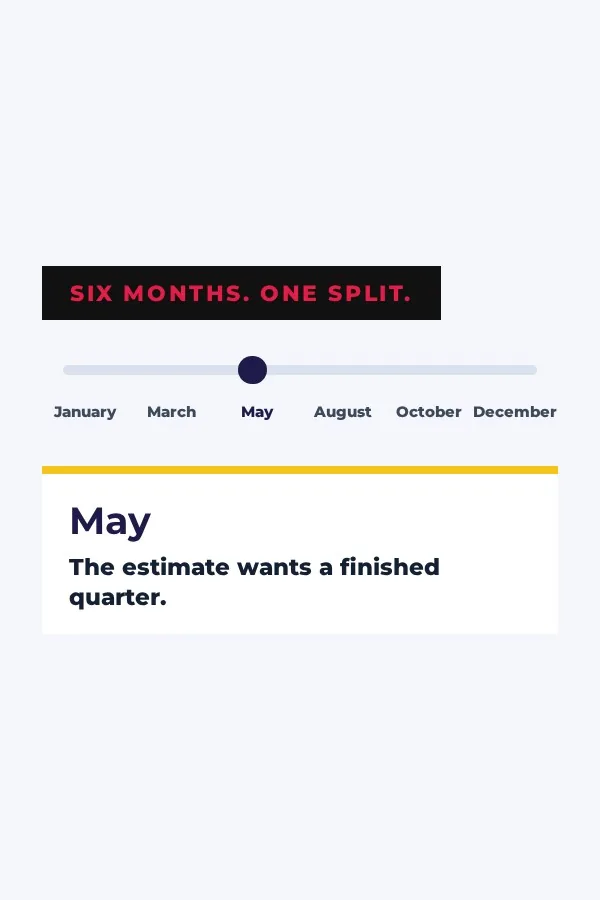
Finished means four things, and the software saying reconciled is not one of them.
Click to see the month ›Tap to see the month ›
Who decides, once the books are true.
Click to read who decides ›Tap to read who decides ›
Money leaving the bank in late summer is either the owner's own line or it is a cost. Those two readings do not produce the same month.
Click to see the draw ›Tap to see the draw ›
Sometimes the honest answer is that you need less help than the two titles suggested. The page is allowed to say so.
Click to meet the practice ›Tap to meet the practice ›
You are about to hire, and the month in front of you is the thing we read with you before a title gets chosen, so the job matches that month rather than the word you typed.
Meet StevenOne finished month gets a straight answer.
You will be talking to the Steven Palmieri practice.

A useful comparison starts with the record, not with a title. The bank has to agree. Deposits have to have names, because a deposit can be a sale, a transfer, money you put in, or a payout from a card processor that already took its fee. Bills that are still open have to stay on a list. Owner activity has to sit on its own line, or profit will swallow a draw and call it a cost.
When those pieces are true, you can point at the month. You can hand it to a lender, use it to decide a purchase, or let a return be prepared from it. Until they are true, a bigger title does not repair them. The title arrives later, if it arrives at all.
We keep that record. We set payroll up with a provider you run, so payday has a home and we are not the ones running it. We prepare the return from the months, and we read the year with you while a choice can still change it. Statements we issue carry no attest report. The signed report, when a bank or a buyer actually requires one, goes to a firm allowed to sign it.

Ordinary speech stretches both words until they cover the same person. An owner says one word and describes the monthly record. The same owner says the other word and describes the return, the notice, or a meeting before the year ends. Neither description, by itself, is a request for a signed opinion on the statements.
The short reserved list is the attest report. Audit, review, and compilation under the standards that require a signature are that other job. Everything an owner usually came for sits on this side of the line. Books that close. A return prepared from them. A conversation about cash, pay, and the shape of the year. Payroll arranged with a provider the owner already runs.
If your month is small and already true, keep your money. Sending you back to a month that works is a finished answer, and the fee stays with you.

The quiet after a true close is the whole point of the comparison. You open the month and the cash matches, the categories held, and no question is hiding in profit. A letter from the state is less frightening when the papers under it are papers you already walked.
That feeling does not require a new title on the door. It requires the same close, on the same day, whether the shop was busy or the week was quiet. We are hired for that close, and the title can wait until the cash already matches.
Payroll setup is the piece owners forget until a payday arrives and no provider is ready. Payday keeps its own home on the provider the owner already chose. What we add is the setup and a books file that can read the result. The return comes after the months agree, so the signature page is not the first time the year is read. A plan for the year sits in the same close, while a purchase or a change in pay can still change what the return will say. Those three stay with the books. They do not wait for a longer title.
Last month ought to open by itself, with nobody narrating the rows. The cash matches the bank. The deposits have names. The bills that are still open are still on the list. Whatever the owner took out is written apart from the costs. That quiet is what this comparison is for. It arrives the same way if you typed one title or if you typed both, because the month does not care which word was in the box. Bring the rows. We will say whether they already hold a finished month, or whether a name is still missing.

The two jobs have their own page, and so does the sort of work people picture when they type both words. The month you can point at is spelled out on its own. The role that reads the year, once the record can hold it, is spelled out without pretending the record was optional. An August draw gets a page because that is where the owner's line gets confused with a cost. Questions that show up after the size is clear have a page too, and so does the federal estimated payment that has to stand on the same close.
Bring one month. We will tell you which job it is, including when the job is none of them.